
What Is Lyme Disease
Understand Borrelia burgdorferi infection, how it progresses, why it becomes chronic, and the symptoms that affect every system of the body.
What Lyme disease is →Rosenheimer Str. 6-8, 83043 Bad Aibling, Germany · info@clinicum-stgeorg.de
Lyme Disease Center
Since 1995, St. George Hospital has treated more than 12,000 patients with chronic Lyme disease, using multimodal inpatient protocols that address the full complexity of tick-borne illness.
Chronic Lyme disease is one of the most misunderstood and undertreated conditions in modern medicine. Standard antibiotic courses often fail to resolve the complex, multi-systemic symptoms that patients experience for months or years after initial infection.
Contrary to common belief, Lyme disease is not transmitted exclusively by ticks. Evidence supports transmission through mosquitoes, horse flies, and congenital pathways. Clinical observations also raise questions about potential person-to-person transmission, with multiple family members frequently presenting with active Borrelia infection.
At St. George Hospital, we have spent over three decades developing an integrative, multimodal approach that addresses the full spectrum of tick-borne illness, including persistent Borrelia infection, co-infections such as Bartonella and Babesia, immune dysregulation, neurological involvement, and the systemic inflammation that drives chronic symptoms.
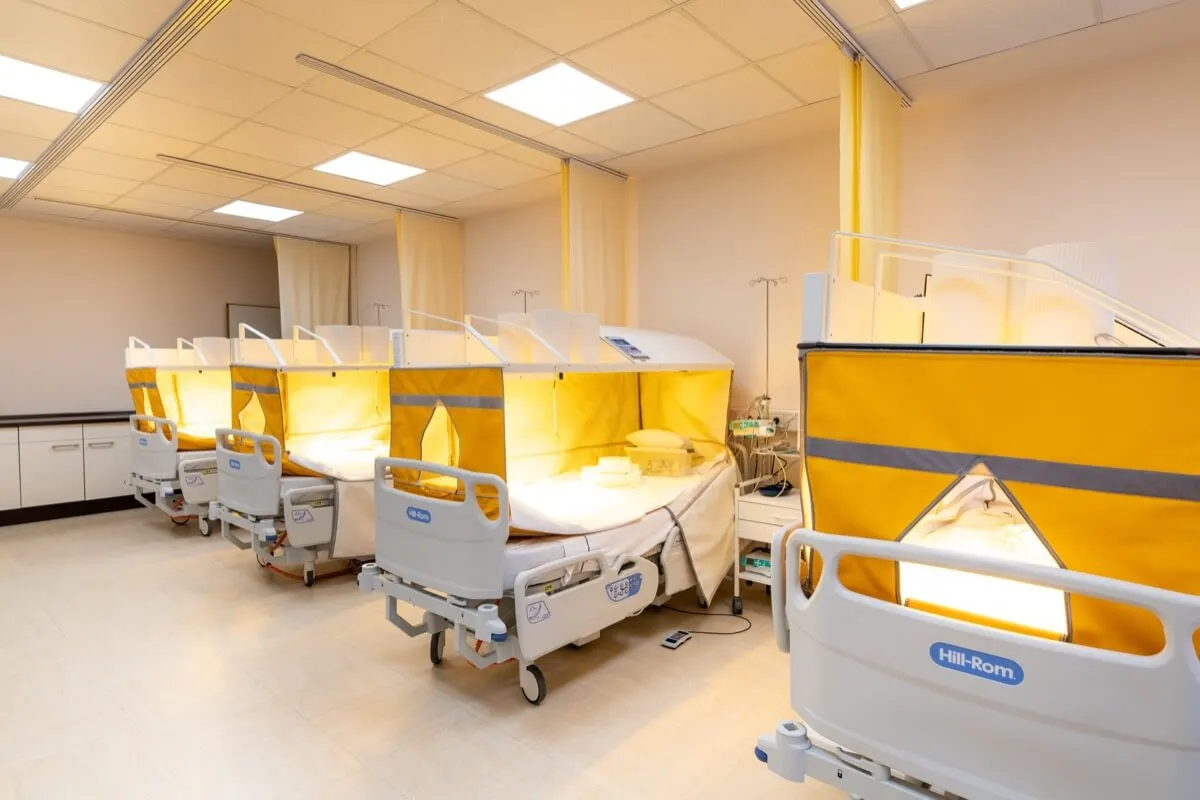
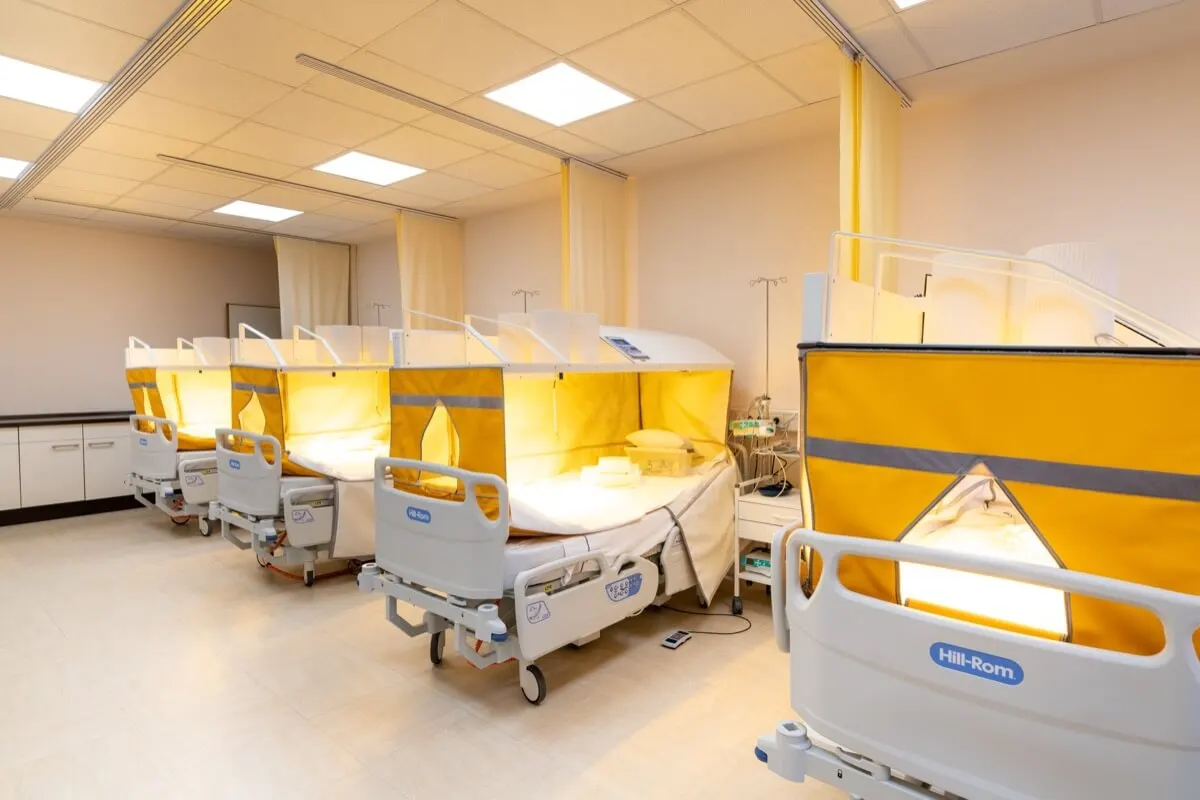
Our treatment is structured into distinct clinical modules: the Core Lyme module (2 weeks of hyperthermia at 41.6–41.8 °C / 106.9–107.2 °F with combination antibiotics), the Co-Infection Module (10 PDT sessions with Riboflavin + UV/blue light and apheresis), and the Microbiome Restore Week (microbiome transplantation and gut restoration). Additional blood purification and neural therapy are available based on individual findings. Protocols are developed by Dr. Julian Douwes and supervised by Dr. Angelina Svircev.
Learn about our diagnostic methods, treatment protocols, and the integrative philosophy that has guided our approach to tick-borne illness since 1995.
Understand Borrelia burgdorferi infection, how it progresses, why it becomes chronic, and the symptoms that affect every system of the body.
What Lyme disease is →Why standard testing misses chronic Lyme, and how our advanced diagnostic approach identifies the full picture of infection and immune disruption.
How we diagnose Lyme →Our comprehensive, individualized treatment approach combining antimicrobials, hyperthermia, immune support, and detoxification.
How we treat chronic Lyme →Bartonella, Babesia, Ehrlichia, Rickettsia, and other tick-borne co-infections that complicate diagnosis and require targeted treatment.
Co-infections we test for →How we combine hyperthermia, apheresis, immune therapy, detoxification, and more into one coordinated protocol, planned by one team.
How the Lyme therapies combine →The history of Lyme disease treatment at St. George Hospital, from the first observation in 1995 to today's modular inpatient protocol.
The Lyme programme since 1995 →
“Chronic Lyme disease is not a single infection. It is a multi-systemic illness that requires a multi-systemic treatment approach. You cannot treat the whole patient with a single antibiotic.”
Friedrich Douwes M.D. (1945–2022)
Founder of St. George Hospital
Over 40 years of clinical experience in integrative Lyme disease treatment
Today, our Lyme disease program continues under the care of Angelina Svircev M.D., with treatment protocols developed by Julian Douwes M.D. (Chief Medical Officer).
We use advanced laboratory testing, including specialized Borrelia culture, ELISpot, CD57 analysis, and co-infection panels to identify what standard tests miss.
Our hyperthermia protocols raise core body temperature to create conditions hostile to Borrelia spirochetes while enhancing immune function and antibiotic efficacy.
We welcome patients from around the world and provide coordination for travel, accommodation, translation, and follow-up care with your home physicians.
We combine up to 12 treatment modalities in a single, coordinated protocol, including antimicrobials, hyperthermia, apheresis, immune therapy, and detoxification.
We routinely test for and treat Bartonella, Babesia, Ehrlichia, Rickettsia, Chlamydia pneumoniae, Mycoplasma, and other co-infections that perpetuate symptoms.
Our treatment approach is grounded in decades of clinical experience and supported by published research on hyperthermia, Borrelia biology, and integrative Lyme care.
Blood filtration removes inflammatory proteins, microclots, and pathogen-associated toxins that perpetuate chronic Lyme symptoms.
What H.E.L.P. apheresis involves →Controlled fever therapy targets heat-sensitive Borrelia organisms and activates the immune system's anti-pathogen response.
What a whole-body hyperthermia session involves →Medical ozone provides antimicrobial support and immune modulation, a key component of our multimodal Lyme protocol.
What ozone therapy involves →Antimicrobial PDT penetrates biofilm-protected Borrelia colonies that resist standard antibiotic treatment.
What photodynamic therapy involves →Targeted immune support restores the immune competence needed to control and clear chronic Lyme infection.
What immune therapy involves →The Core Lyme module is 2 weeks. If co-infections are present, the Co-Infection Module adds 2 additional weeks. The Microbiome Restore Week adds 1 more week. A full comprehensive program is typically 3-5 weeks depending on your diagnostic findings.
The majority of our Lyme disease patients report significant improvement in their symptoms following treatment. Whether and how much symptoms recede shows in the follow-up measurements; we discuss what is realistic for your history in the first consultation. Outcomes depend on the duration of illness, the presence of co-infections, and individual patient factors. Our medical team will discuss realistic expectations during your initial consultation.
Yes. We welcome companions and can arrange accommodation for a family member or partner during your stay. Many of our international patients travel with a companion, and our patient coordination team can help arrange suitable arrangements in Bad Aibling.
Yes. At the end of your treatment, we provide a comprehensive treatment report for your home physician. We also offer remote follow-up consultations to ensure continuity of care and can communicate directly with your doctor if needed.
Many patients return for additional treatment cycles, particularly those with complex co-infections or long-standing illness. We offer remote follow-up consultations between visits to monitor your progress and adjust recommendations. Subsequent treatment stays are typically shorter than the initial program.
Some patients notice improvement during their treatment stay, while others experience a gradual recovery over the weeks and months following treatment. Changes often continue over the months after discharge, which is why follow-up consultations are scheduled.
There is no fixed price. After our physicians have reviewed your findings, you receive an individual estimate that lists the daily inpatient rate, diagnostics and therapy blocks. Treatment is self-pay; the itemised invoice can be submitted to a US insurer for out-of-network review. We cannot promise reimbursement.
A video consultation in English before you travel. A physician reviews your findings first; we reply by email within one business day (Mon–Fri).
Mon–Thu 08:00–17:00, Fri 08:00–14:00 (CET/CEST)+49 8061 398-0info@clinicum-stgeorg.de
St. George Hospital is a specialist hospital, not an emergency department. In a medical emergency in Germany, dial 112.