
Microcurrent Brain Stimulation
Cranial Electrotherapy Stimulation (CES)
A non-invasive treatment that applies low-level pulsed electrical current across the head via ear clip electrodes to manage anxiety, insomnia, depression, and chronic pain.
What Is CES?
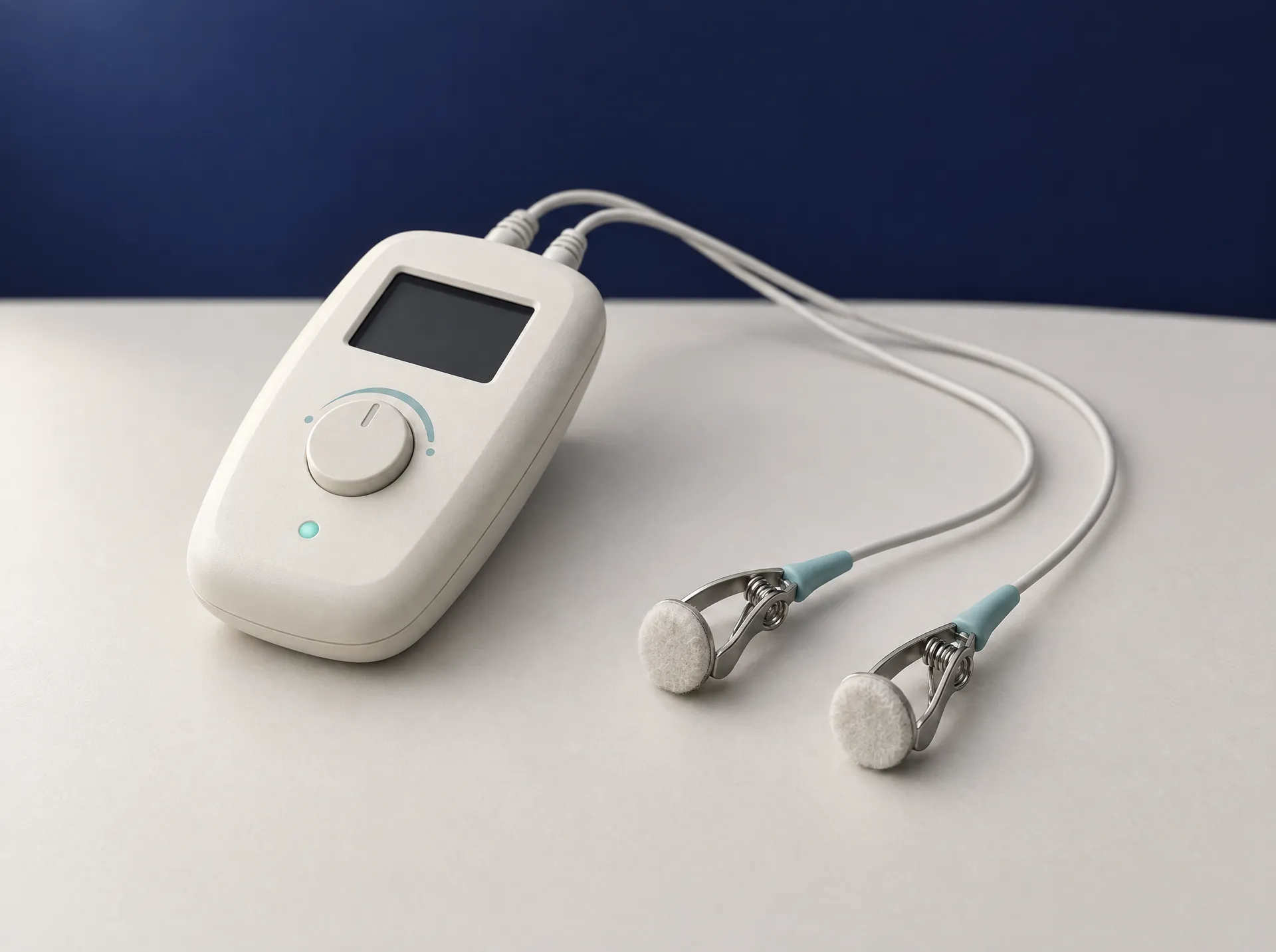
Cranial electrotherapy stimulation (CES) delivers a very low-level alternating microcurrent (typically below 1 milliamp) through electrodes clipped to the earlobes or placed on the mastoid processes behind the ears. This subsensory current modulates neurotransmitter activity and brain wave patterns.
CES has been cleared by regulatory authorities in multiple countries for the treatment of anxiety, insomnia, depression, and pain. It is used at St. George Hospital as a complementary treatment within comprehensive neurological and psychiatric treatment programs.

How Does It Work?
The microcurrent delivered by CES is thought to modulate neurotransmitter production and release, particularly serotonin, beta-endorphin, and GABA. EEG studies show that CES shifts brain wave patterns toward alpha frequencies, which are associated with relaxed alertness and reduced anxiety.
The current follows the path of least resistance through the skull, primarily affecting subcortical structures including the thalamus, hypothalamus, and limbic system — brain regions central to mood regulation, sleep-wake cycles, and pain processing.
Conditions Treated
- Generalized anxiety
- Insomnia and sleep disturbances
- Depression
- Chronic pain
- Post-COVID neurological symptoms
- Stress-related symptoms
Is CES Right for You?
CES is a gentle, well-tolerated treatment that may complement other therapies. Our specialists will assess whether it is appropriate for your condition
What a session feels like
- Before Two small clips go on your earlobes. The device is turned up to a level just below what you can feel.
- During 20–60 minutes. Most people feel nothing, or a faint tingle at the start. Many fall asleep.
- Afterwards Nothing to recover from; it can be repeated daily. A home device lets you continue after your stay.
Evidence & Safety
CES has been studied in over 100 published clinical trials. Meta-analyses in the Journal of Nervous and Mental Disease and other peer-reviewed journals demonstrate statistically significant benefits for anxiety and insomnia. The technology has an excellent safety profile with over 50 years of clinical use and no reported serious adverse events. The most common side effect is mild skin irritation at the electrode sites, which is uncommon and transient.
Request a consultation
A video consultation in English before you travel. A physician reviews your findings first; we reply by email within one business day (Mon–Fri).
Mon–Thu 08:00–17:00, Fri 08:00–14:00 (CET/CEST)+49 8061 398-0info@clinicum-stgeorg.de
St. George Hospital is a specialist hospital, not an emergency department. In a medical emergency in Germany, dial 112.