
Antimicrobial & Metabolic Support
Methylene Blue Intravenous Therapy
A carefully dosed intravenous application of pharmaceutical-grade methylene blue, used under medical supervision for its antimicrobial properties and potential to support mitochondrial electron transport.
What Is Methylene Blue I.V. Therapy?
Methylene blue (methylthioninium chloride) is a pharmaceutical compound with a long history of medical use, originally developed in the late 19th century. It is approved for the treatment of methemoglobinemia and has been used clinically as an antimalarial agent. More recently, low-dose methylene blue has been investigated for its effects on mitochondrial function and cellular energy metabolism.
At St. George Hospital, pharmaceutical-grade methylene blue is administered intravenously at carefully controlled doses as part of comprehensive treatment protocols for chronic infections and metabolic conditions. It is not used as a standalone therapy.

How Does It Work?
Methylene blue functions as an alternative electron carrier in the mitochondrial electron transport chain. At low concentrations, it can accept electrons from NADH and transfer them to cytochrome c, effectively bypassing dysfunctional complex I and complex III. This may help restore ATP production in cells with impaired mitochondrial function.
Additionally, methylene blue has demonstrated antimicrobial activity against certain pathogens in laboratory studies. Its redox-cycling properties also confer antioxidant effects at low doses, though at higher concentrations it acts as a pro-oxidant.
Clinical Applications
At St. George Hospital, methylene blue I.V. is considered for patients with the following conditions, always as part of a broader treatment protocol:
- Chronic Lyme disease (as adjunct antimicrobial support)
- Methemoglobinemia (established first-line indication)
- Mitochondrial dysfunction with documented metabolic impairment
- Selected chronic infections unresponsive to standard therapy
Note: The use of methylene blue beyond its approved indications is considered investigational. Treatment decisions are made individually by the attending physician based on the clinical situation.
Could this belong in your plan?
That depends on your findings, not on the therapy. Send what you have with a short history; a physician reads it before the video call and tells you whether this treatment belongs in your program.
What a session feels like
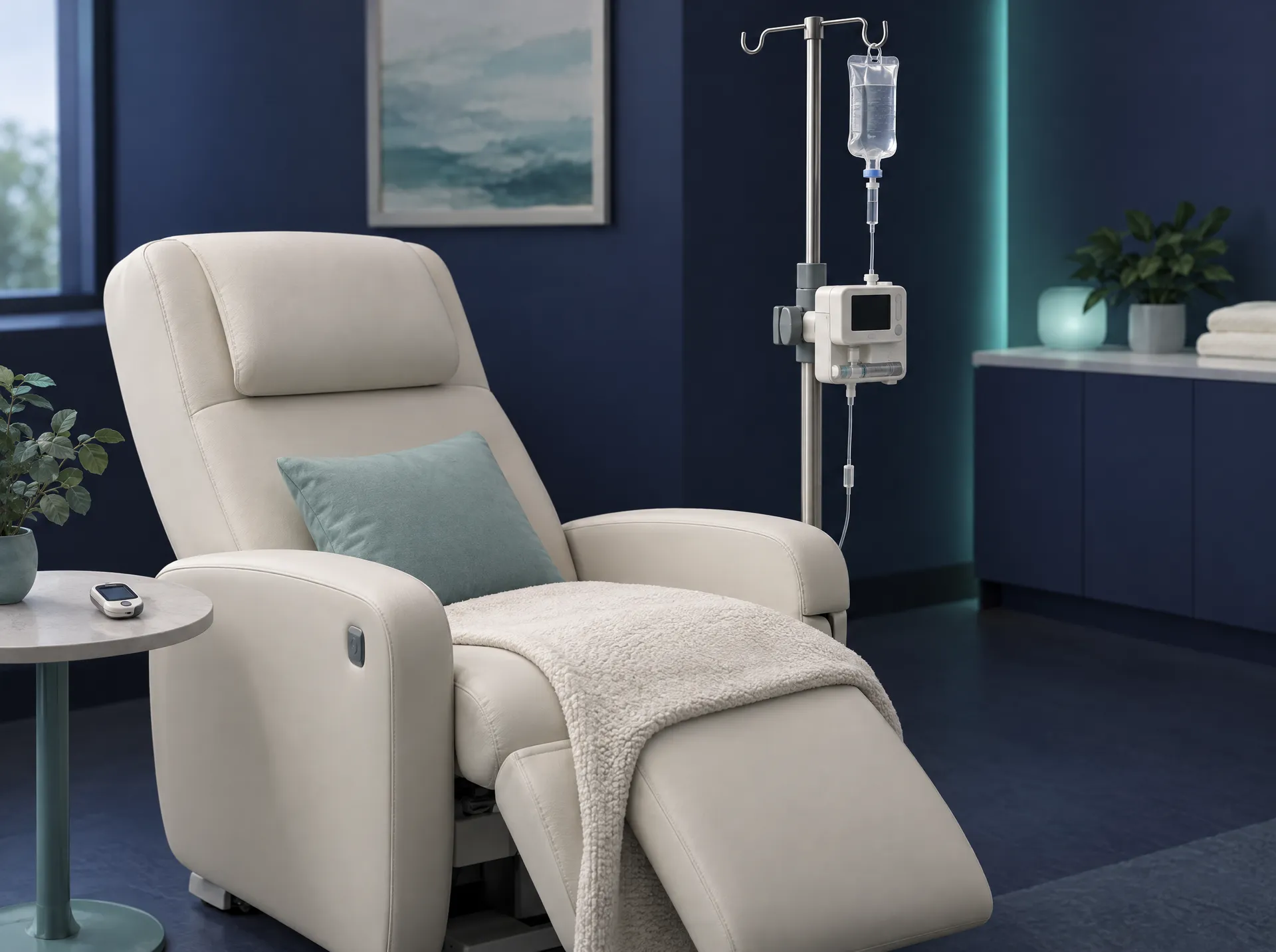
- Before A nurse places an IV line. The infusion bag is unmistakably blue.
- During A slow drip over 30–60 minutes. You are monitored during and after; at the low doses we use it is generally well tolerated.
- Afterwards Your urine will be blue or green for 24–48 hours, and sometimes your skin has a faint bluish tint for a day. Both are expected and harmless.
Evidence & Safety
Methylene blue has been used in medicine for over 130 years and is on the WHO List of Essential Medicines for its approved indications. Research into its mitochondrial and neuroprotective effects is ongoing, with preclinical and early clinical studies published in journals including Neurobiology of Aging and Antimicrobial Agents and Chemotherapy. Important contraindications include G6PD deficiency and concurrent use of serotonergic medications due to the risk of serotonin syndrome. All patients are screened for these contraindications before treatment.
Request a consultation
A video consultation in English before you travel. A physician reviews your findings first; we reply by email within one business day (Mon–Fri).
Mon–Thu 08:00–17:00, Fri 08:00–14:00 (CET/CEST)+49 8061 398-0info@clinicum-stgeorg.de
St. George Hospital is a specialist hospital, not an emergency department. In a medical emergency in Germany, dial 112.