
EEG Brain Training
Neurofeedback
A real-time EEG-based brain training method that teaches patients to self-regulate their brain wave patterns, improving cognitive function, emotional stability, and neurological performance.
What Is Neurofeedback?
Neurofeedback, also known as EEG biofeedback, is a form of brain training that uses real-time monitoring of brain electrical activity (EEG) to teach patients to modify their own brain wave patterns. The brain’s electrical activity is measured, processed by a computer, and presented back to the patient as visual or auditory feedback.
Through operant conditioning principles, the brain learns to produce more desirable patterns (e.g., increased alpha for relaxation, increased beta for focus) and reduce dysfunctional patterns (e.g., excessive theta associated with inattention). This self-regulation skill transfers to daily life with practice.

How Does It Work?
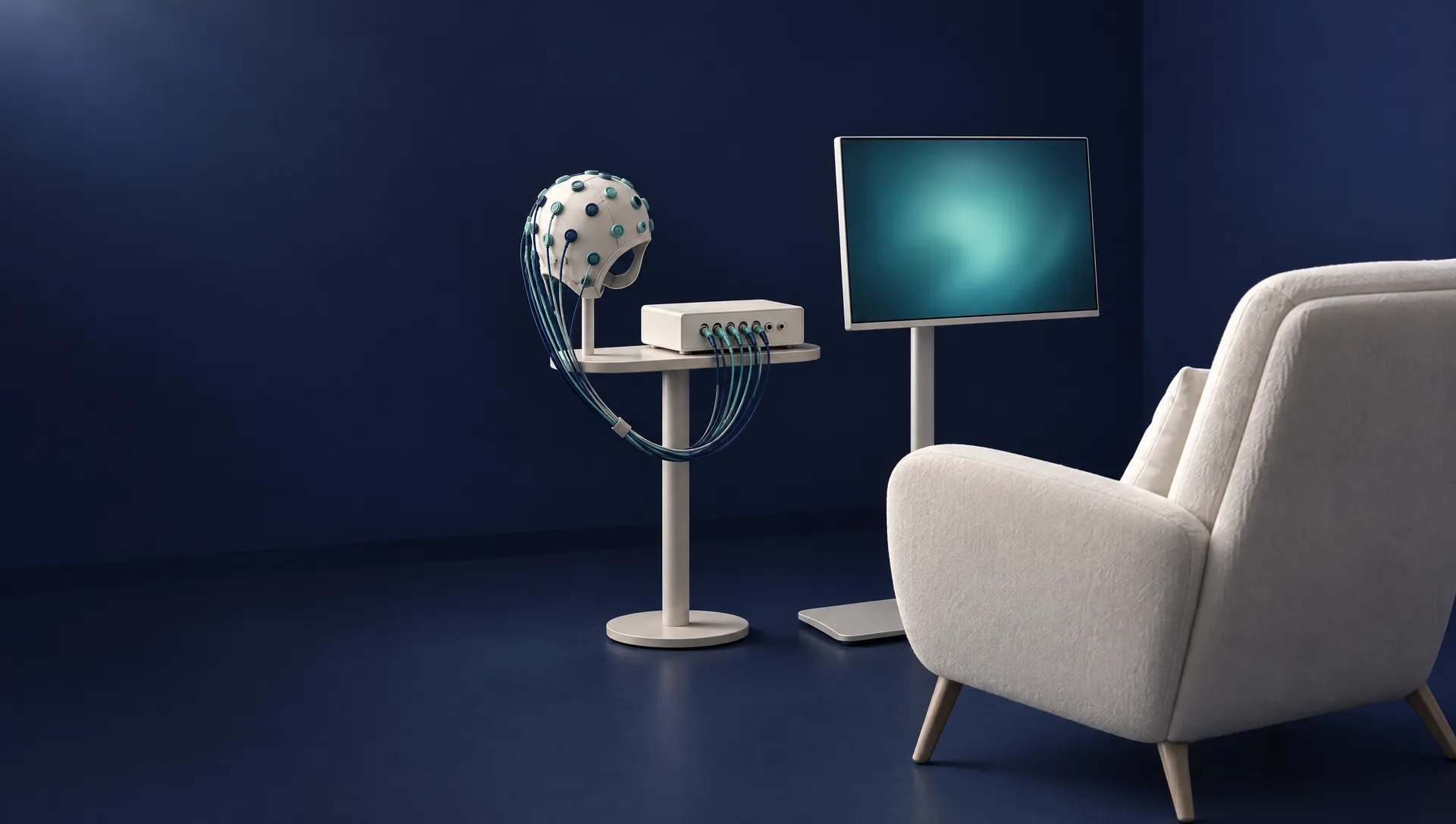
EEG sensors placed on the scalp detect brain wave activity in real time. This signal is analyzed by specialized software that identifies specific frequency bands (delta, theta, alpha, beta, gamma) at targeted brain locations. The patient receives feedback — typically through a video game, movie, or auditory signal — that responds to their brain activity.
When the brain produces the desired pattern, the feedback is rewarding (e.g., the game progresses). When it produces undesirable patterns, the feedback diminishes. Over multiple sessions, the brain learns to maintain healthier activation patterns through neuroplasticity mechanisms.
Conditions Treated
- ADHD and attention disorders
- Anxiety and stress-related disorders
- Insomnia and sleep disorders
- Post-COVID cognitive symptoms
- Depression
- Traumatic brain injury recovery
- Cognitive decline and memory issues
- Peak performance optimization
Is Neurofeedback Right for You?
Neurofeedback protocols are based on a quantitative EEG (qEEG) assessment. Our specialists will map your brain activity to design a targeted training program.
What a session feels like
- Before A few EEG sensors are fixed to your scalp with conductive paste; it washes out. You sit in front of a screen.
- During 30–45 minutes. You watch a film or play a simple game, and when your brain produces the target pattern the picture brightens or the game advances. Nothing goes into your head; the sensors only listen.
- Afterwards Nothing to recover from. Sessions run 3–5 times a week; a course of 10–20 is common during a stay.
Evidence & Safety
Neurofeedback has the strongest evidence base for ADHD, where it is rated as “efficacious and specific” by the Association for Applied Psychophysiology and Biofeedback. Studies published in the Journal of Clinical Psychology, Biological Psychology, and Clinical EEG and Neuroscience support its use for anxiety, insomnia, and cognitive performance. Neurofeedback is completely non-invasive with no known serious side effects. Occasional transient fatigue or headache may occur after sessions as the brain adapts to new patterns.
Request a consultation
A video consultation in English before you travel. A physician reviews your findings first; we reply by email within one business day (Mon–Fri).
Mon–Thu 08:00–17:00, Fri 08:00–14:00 (CET/CEST)+49 8061 398-0info@clinicum-stgeorg.de
St. George Hospital is a specialist hospital, not an emergency department. In a medical emergency in Germany, dial 112.