
Focused Ultrasound
Transcranial Pulse Stimulation (TPS)
A non-invasive neuromodulation technology that uses focused ultrasound pulses to reach and stimulate deep brain structures, with CE marking for the treatment of Alzheimer’s disease.
What Is TPS?
Transcranial Pulse Stimulation (TPS) is a neuromodulation technology that delivers short, focused ultrasound pulses through the skull to stimulate specific brain regions. Unlike transcranial magnetic stimulation (TMS) or transcranial direct current stimulation (tDCS), TPS can reach deep brain structures including the hippocampus, which plays a central role in memory and is affected early in Alzheimer’s disease.
TPS received CE marking in Europe for the treatment of Alzheimer’s disease and is used at St. George Hospital as part of comprehensive neurological treatment programs.

How Does It Work?
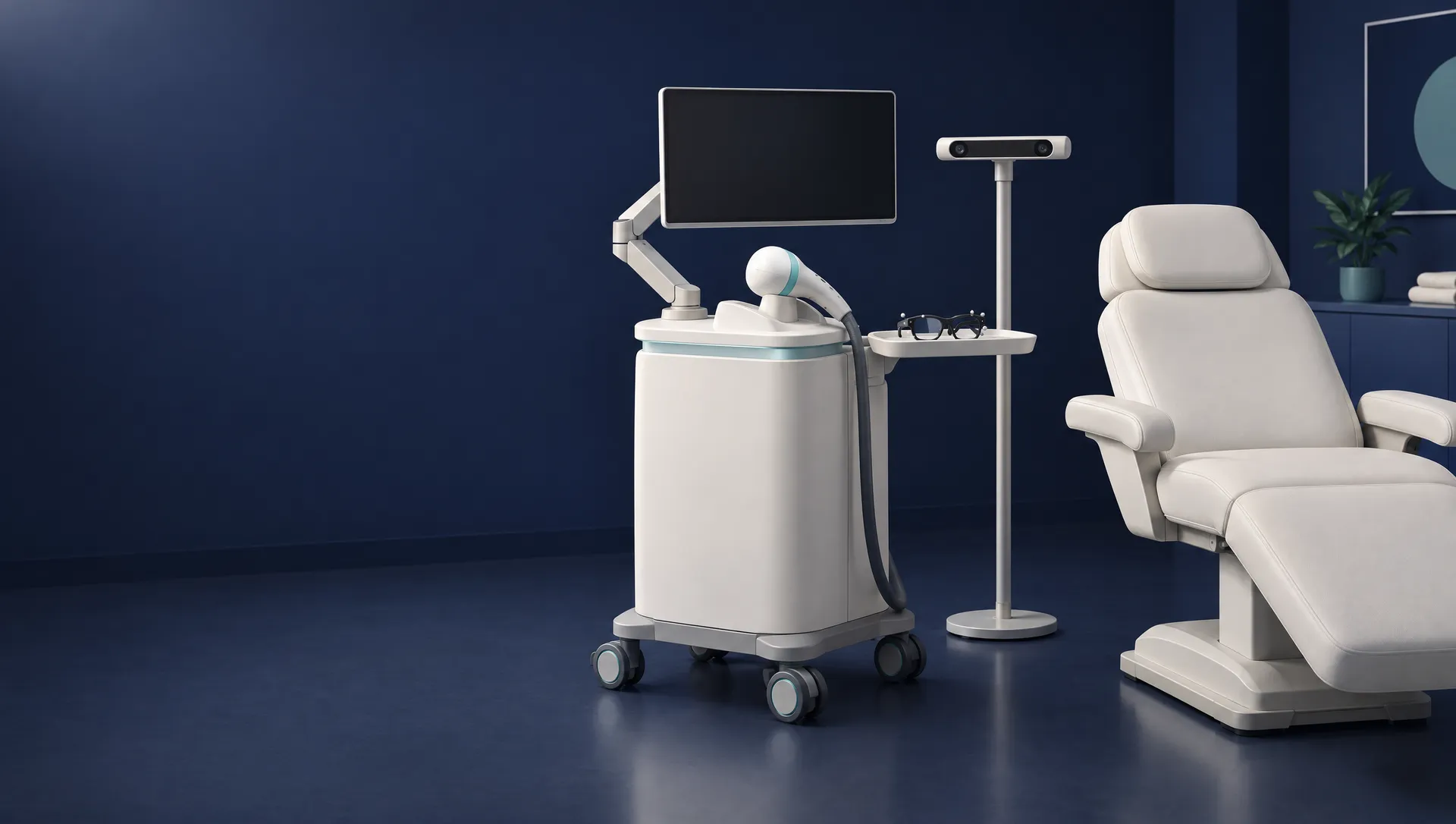
TPS generates low-energy, focused ultrasound pulses that are applied to the scalp through a handheld applicator guided by neuronavigation based on the patient’s MRI. The pulses pass through the skull and stimulate brain tissue through mechanotransduction — the conversion of mechanical energy into biological signals.
This stimulation activates neuroprotective pathways, promotes the release of brain-derived neurotrophic factor (BDNF), enhances synaptic plasticity, and improves regional cerebral blood flow. The neuronavigation system ensures precise targeting of the intended brain regions during each session.
Conditions Treated
- Alzheimer's disease (CE-marked indication)
- Mild cognitive impairment
- Depression (treatment-resistant cases)
- Post-COVID cognitive symptoms ("brain fog")
- Chronic Lyme disease with neurological involvement
- Parkinson's disease (investigational)
Is TPS Right for You?
TPS treatment requires neuroimaging (MRI) for neuronavigation. Our specialists will evaluate whether this therapy is appropriate based on your neurological assessment.
What a session feels like
- Before You sit upright. A neuronavigation screen shows the physician where each pulse will land on your brain.
- During About 30 minutes. The physician moves the handheld device over your scalp; you feel a soft, quick tapping. No anesthesia, no sedation.
- Afterwards You walk out. A standard course is 6 sessions over 2 weeks; protocols are adjusted to your response.
Evidence & Safety
TPS has been studied in clinical trials at major European research centers. Published studies in journals including Alzheimer’s Research & Therapy and Brain Stimulation demonstrate improvements in cognitive function and brain network connectivity in Alzheimer’s patients. The treatment has a favorable safety profile with no serious adverse events reported in clinical trials. Mild, transient side effects may include headache or scalp sensitivity.
Request a consultation
A video consultation in English before you travel. A physician reviews your findings first; we reply by email within one business day (Mon–Fri).
Mon–Thu 08:00–17:00, Fri 08:00–14:00 (CET/CEST)+49 8061 398-0info@clinicum-stgeorg.de
St. George Hospital is a specialist hospital, not an emergency department. In a medical emergency in Germany, dial 112.