
Cellular Metabolism
NAD+ Intravenous Therapy
Intravenous administration of nicotinamide adenine dinucleotide (NAD+) to support mitochondrial function, cellular energy production, and DNA repair mechanisms.
What Is NAD+ I.V. Therapy?
NAD+ (nicotinamide adenine dinucleotide) is a coenzyme present in every living cell that plays a central role in energy metabolism, DNA repair, and cellular signalling. NAD+ levels naturally decline with age and are further depleted by chronic illness, infection, and metabolic stress.
Intravenous NAD+ therapy delivers this essential molecule directly into the bloodstream at concentrations that cannot be achieved through oral supplementation, helping to restore cellular function in patients with mitochondrial dysfunction, chronic fatigue, and neurodegenerative conditions.
How Does It Work?
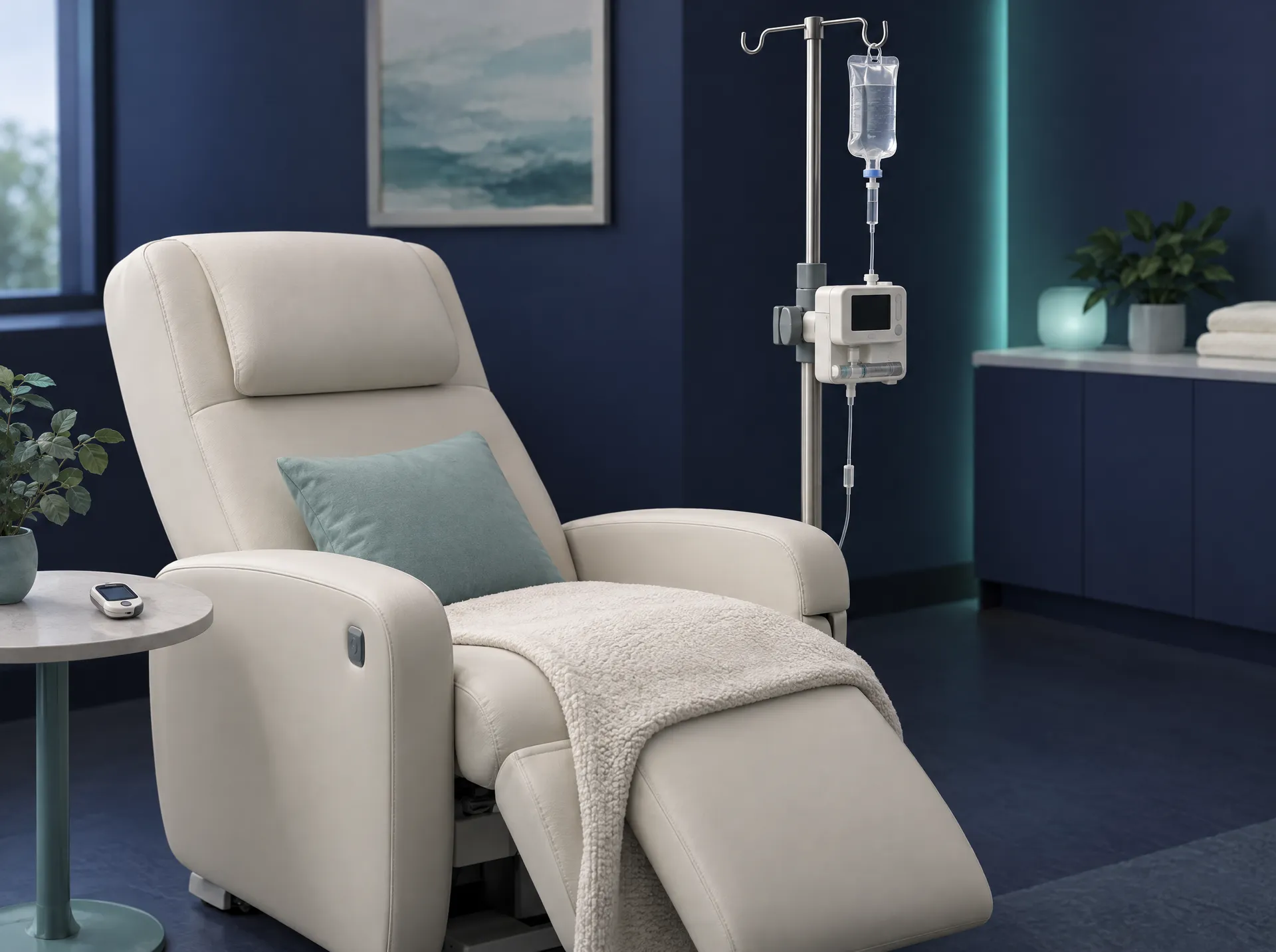
NAD+ is infused intravenously over 2-4 hours at carefully titrated rates to minimize side effects. Once in the bloodstream, NAD+ is taken up by cells throughout the body where it participates in over 500 enzymatic reactions.
Key mechanisms include: fuelling the mitochondrial electron transport chain for ATP production; activating sirtuins (SIRT1-7) involved in DNA repair, gene expression, and cellular stress response; supporting PARP enzymes critical for DNA damage repair; and modulating inflammatory pathways through CD38-dependent mechanisms.
Conditions Treated
- Chronic fatigue syndrome and mitochondrial dysfunction
- Post-COVID syndrome with persistent fatigue
- Chronic Lyme disease
- Neurodegenerative conditions
- Age-related metabolic decline
- Recovery from acute illness or surgery
Could this belong in your plan?
That depends on your findings, not on the therapy. Send what you have with a short history; a physician reads it before the video call and tells you whether this treatment belongs in your program.
What a session feels like
- Before IV line, comfortable chair, and a drip that starts deliberately slowly.
- During The infusion runs 2–4 hours and the rate is increased as you tolerate it. If you feel nausea, chest tightness or muscle cramping, say so at once; slowing the drip usually settles it within minutes.
- Afterwards You walk back to your room. A course is often 3–5 sessions.
Evidence & Safety
NAD+ biology is an active area of scientific research. Preclinical studies published in journals including Cell, Nature, and Science have established NAD+’s role in mitochondrial function and ageing. Clinical evidence for intravenous NAD+ therapy is still accumulating, with early studies and case series showing improvements in fatigue, cognitive function, and metabolic markers. At St. George Hospital, NAD+ therapy is used as part of comprehensive treatment protocols rather than as a standalone intervention.
Request a consultation
A video consultation in English before you travel. A physician reviews your findings first; we reply by email within one business day (Mon–Fri).
Mon–Thu 08:00–17:00, Fri 08:00–14:00 (CET/CEST)+49 8061 398-0info@clinicum-stgeorg.de
St. George Hospital is a specialist hospital, not an emergency department. In a medical emergency in Germany, dial 112.