
Is this you?

Your Lyme test was negative. Your symptoms did not get the memo.

You remember the bite, or you do not. You remember the summer everything changed. Since then: a rheumatologist, a neurologist, a psychiatrist, and a two-tier test that came back negative twice. In a drawer at home is a folder of results that do not add up to anything.

This page explains why that test misses what it misses, and what we measure instead.

When to Seek Testing

Symptoms That Warrant Advanced Lyme Diagnostics

Many patients who come to us have been symptomatic for months or years without a clear diagnosis. If you experience a combination of the following symptoms, especially if they began after a known or possible tick exposure, advanced Lyme testing should be considered:

  • Persistent fatigue unresponsive to standard treatment
  • Migratory joint or muscle pain without clear orthopedic cause
  • Cognitive impairment, brain fog, or memory difficulties
  • Neurological symptoms: tingling, numbness, nerve pain
  • Cardiac symptoms: palpitations, chest tightness
  • Psychiatric symptoms that appeared suddenly or worsened
  • Symptoms that wax and wane on a cyclical pattern
  • Multiple diagnoses without clear resolution (fibromyalgia, CFS, MS, etc.)
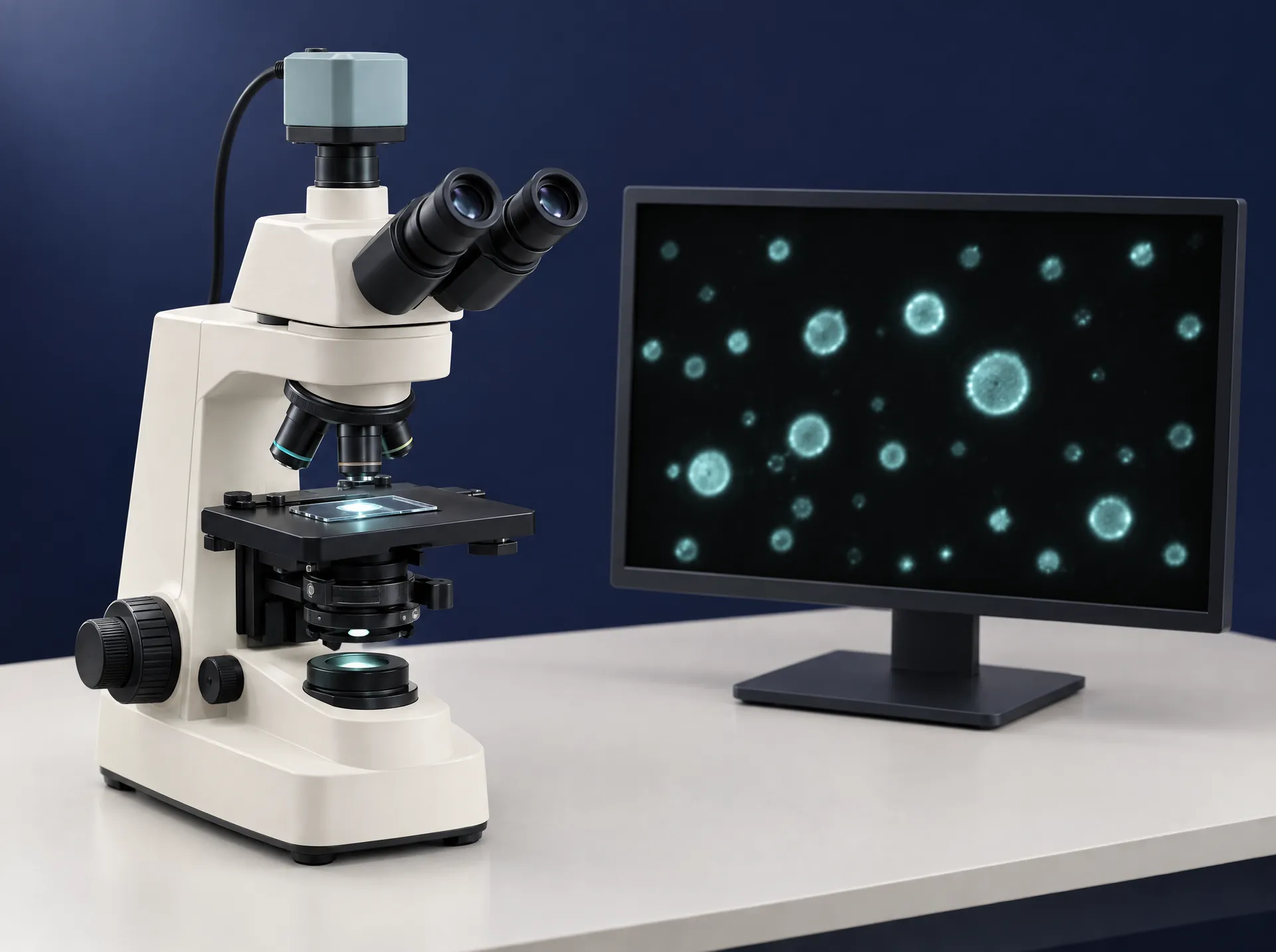
Illustration of a dark-field microscopy device
Illustration: dark-field microscope with camera and monitor. Not a photo of our department.
Why tests miss it

Why Standard Testing Fails

The conventional two-tier testing approach has significant limitations that leave the majority of chronic Lyme patients without a proper diagnosis.

The Two-Tier Problem

The standard diagnostic protocol requires a positive ELISA screening test before a Western Blot confirmation is performed. This two-tier system was designed for epidemiological surveillance, not individual patient diagnosis. Its sensitivity for chronic or late-stage Lyme disease is estimated at only 50-60%, meaning nearly half of infected patients receive false-negative results.

Several factors contribute to this failure:

  • ELISA measures antibody levels that may decline in chronic infection
  • Western Blot requires a specific number of reactive bands, excluding patients with partial responses
  • Immune suppression from chronic Borrelia infection reduces antibody production
  • Some Borrelia strains produce antibodies not detected by standard test kits
  • Early antibiotic treatment can prevent full seroconversion

Clinical Consequences

The consequences of relying solely on standard testing are severe. Patients with active chronic infections are told they do not have Lyme disease. They are given alternative diagnoses, prescribed symptom-management medications, and often told their symptoms are psychological.

This diagnostic failure leads to:

  • Years of undiagnosed infection allowing further tissue damage
  • Inappropriate treatments for misdiagnosed conditions
  • Progressive neurological, cardiac, and joint involvement
  • Psychological distress from being dismissed by physicians
  • Accumulation of co-infections that go undetected

At St. George Hospital, we believe that no patient should be dismissed because of a test limitation. Clinical evaluation must always accompany laboratory results.

What we test

How We Diagnose Chronic Lyme Disease

Our diagnostic approach combines comprehensive clinical evaluation with advanced laboratory testing to build a complete picture of each patient’s infection status, immune function, and systemic involvement.

1

Comprehensive Medical History

Detailed review of symptom onset, progression, tick exposure history, prior testing results, previous treatments, and response to antibiotics. We assess the full timeline and pattern of illness to identify characteristic Lyme disease features.

2

Physical and Neurological Examination

Thorough physical examination with specific attention to neurological function, joint involvement, cardiac assessment, and signs of autonomic dysfunction. We evaluate for clinical markers of active infection and systemic inflammation.

3

Advanced Borrelia Testing

We utilize multiple testing methodologies beyond standard ELISA and Western Blot, including Borrelia ELISpot (cellular immune response), specialized Western Blot with expanded band analysis, and when indicated, direct detection methods. These tests measure the cellular immune response to Borrelia, which remains active even when antibody levels decline.

4

CD57 Natural Killer Cell Analysis

CD57+ NK cell levels are characteristically low in chronic Lyme disease and serve as both a diagnostic marker and a treatment response indicator. Serial CD57 measurements help us track treatment progress over time.

5

Co-Infection Panel

Comprehensive testing for common tick-borne co-infections including Bartonella, Babesia, Ehrlichia, Anaplasma, Rickettsia, Chlamydia pneumoniae, Mycoplasma pneumoniae, and Yersinia. Co-infections are present in an estimated 50-80% of chronic Lyme patients and require specific, targeted treatment.

6

Immune Function Assessment

Evaluation of immune system markers including lymphocyte subsets, cytokine profiles, complement levels, and immunoglobulin levels to assess the degree of immune dysregulation and guide immunomodulatory treatment decisions.

7

Systemic Assessment

Additional testing as clinically indicated, including inflammatory markers (CRP, ESR, cytokines), thyroid function, adrenal function, hormonal panels, micronutrient levels, liver and kidney function, and heavy metal screening to evaluate the full systemic impact of chronic infection.

Close-up of hands holding an open navy folder with a few pages of unreadable printed results at a light oak desk
How we think about it

Clinical Judgment Guides Our Diagnosis

Lyme disease remains a clinical diagnosis supported by laboratory testing, not a laboratory diagnosis alone. No single test can definitively confirm or rule out chronic Borrelia infection. Our physicians integrate the full clinical picture, patient history, symptom pattern, physical examination findings, and results from multiple laboratory tests, to arrive at a diagnosis and treatment plan.

We take every patient’s symptoms seriously. If you have been told that your tests are negative but your symptoms persist, we encourage you to seek a comprehensive evaluation. Many of our most successful treatment outcomes begin with patients who were previously told they did not have Lyme disease.

Testing Methods Compared

Standard vs. Advanced Diagnostics

Standard Testing

Commonly used in conventional medical settings:

  • ELISA screening (antibody-based)
  • Standard Western Blot (limited bands)
  • Sensitivity: approximately 50-60% for chronic Lyme
  • Does not detect cellular immune response
  • No co-infection screening included
  • No immune function assessment

Our Advanced Protocol

Comprehensive approach used at St. George Hospital:

  • Borrelia ELISpot (T-cell immune response)
  • Expanded Western Blot analysis
  • CD57 NK cell quantification
  • Full co-infection panel (8+ pathogens)
  • Immune system profiling
  • Inflammatory and metabolic markers
  • Clinical correlation with experienced physicians
Evidence

The Case for Comprehensive Testing

Published research consistently demonstrates the inadequacy of standard Lyme testing for chronic disease. Key findings include:

  • Two-tier testing misses up to 50% of culture-confirmed late Lyme cases (Dressler et al., 1993)
  • T-cell based assays (ELISpot) detect cellular immune responses absent in serological tests (von Baehr et al., 2012)
  • CD57+ NK cells are significantly reduced in chronic Lyme patients (Stricker & Winger, 2001)
  • Co-infections alter the clinical presentation and reduce diagnostic accuracy for Borrelia (Swanson et al., 2006)
  • Clinical diagnosis combined with advanced testing improves detection rates for chronic Lyme disease

Our diagnostic approach reflects the current understanding of Borrelia biology and the well-documented limitations of standard serological testing.

What Patients Can Expect

A typical diagnostic evaluation at St. George Hospital includes:

  • 90-minute initial physician consultation
  • Comprehensive blood panel (10+ tests)
  • Physical and neurological examination
  • Results reviewed within 5-10 working days
  • Personalized treatment plan based on findings
  • Full written report for your records
Related therapies

Treatments Informed by Our Diagnostics

H.E.L.P. Apheresis

When diagnostics reveal elevated inflammatory markers and microclots, apheresis directly filters these from the bloodstream.

What H.E.L.P. apheresis involves →

Ozone Therapy

Immune panel results inform ozone therapy protocols that enhance immune function and provide antimicrobial support.

What ozone therapy involves →

Request a consultation

A video consultation in English before you travel. A physician reviews your findings first; we reply by email within one business day (Mon–Fri).

Mon–Thu 08:00–17:00, Fri 08:00–14:00 (CET/CEST)+49 8061 398-0info@clinicum-stgeorg.de

St. George Hospital is a specialist hospital, not an emergency department. In a medical emergency in Germany, dial 112.

CallRequest